A territory where the sun never sets

Europe’s outermost regions (ORs) comprise six French overseas territories (French Guiana, Guadeloupe, Martinique, Mayotte, Réunion and Saint-Martin), two autonomous Portuguese regions (the Azores and Madeira) and one autonomous Spanish community (the Canary Islands).
The OR status exists because the Union has, from an early age, recognized that these territories face a structural, social and economic situation that is “compounded by their remoteness, insularity, small size, difficult topography and climate, economic dependence on a few products, the permanence and combination of which severely restrain their development.”
The recognition of the lack of economic hinterland has led the Parliament, the Council and the Commission to adopt several specific measures, involving funding, taxation, transportation, specific customs policies and state-aid programs, designed to protect what Juncker recognizes as “places where the natural resources and human wealth of our Union are concentrated. It is in those regions, laboratories of excellence and guardians of biodiversity, that the future of Europe begins.” After all, these regions allow the Union to currently have a territory where the sun never sets.
Three of the above mentioned ORs, the Portuguese and Spanish ones, enjoy a degree of political autonomy and jurisdictional capacity from their respective EU-Member states. If, and when, the EU rapidly moves to a European Republic, how will these regions be integrated in this new political entity?
Bear in mind that most of this jurisdictional capacity was obtained through political struggle between “we the islanders” versus “them the mainlanders”, due to lack of interest and investment from generations of central government metropolitan decision makers over the centuries. And what binds them together is the fact that the vast majority of them are non-sovereign small island economies, where the sharing of their economical and political struggle is very much alive and present when defending their interests within the EU.
Given their special status within their countries and within the EU, a special constitutional status that other 22 EU Overseas Countries and Territories also enjoy, especially in those belonging to The Netherlands, Portugal and Spain, the EU cannot move into a Republic without recognizing such specificities and jurisdictional capacity of these jurisdictions.
Therefore, remote small island economies cannot become like the US Minor Outlying Islands where the US Federal Government refuses to provide for tools that allow these territories to rapidly adapt to economic shocks and attract foreign direct investment by the use of a combination of taxation, migration/borders and transportation policies.
In the advent of a European Republic, the harmonization of such policies on these small island economies must be done cautiously.
Derogations are needed for Outermost Regions
Unlike mainland economies, small island economies have a greater need to use their legislative capability to attract foreign direct investment. You can find examples of strong use of jurisdictional capacity in EU outermost and/or small island economies such as Madeira, the Azores and the Canary Island or outside the EU as it is the case of the British Overseas Territories and Crown Dependencies.
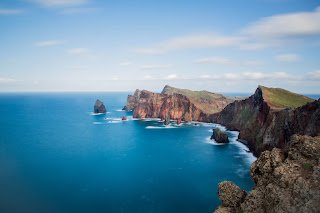
Take for example the case of the Autonomous Region of Madeira, where the low corporate tax rate of 5%, within its International Business Center, approved as state-aid by the Commission, is responsible for assuring 22% of the region’s tax revenue and employing, directly, at least 2% of the working population in the transactional services sector (not-including Tourism). The amount of tax revenue generated is almost the same amount that is transferred by the Portuguese Government and the EU to that outermost region, where, by constitutional law, all revenues generated belong to the Region’s government.
Although a monetary union requires, by economic definition, a highly harmonized, if not unified, taxation system, it is also important to mention that such market economies do need “capitalist escape valves”.
These escape valves consist of efficient and low taxation jurisdictions capable of acting as an interface between different economic systems and jurisdictions. At the same time, and through these tax regimes, small island economies ensure their international competitiveness and capture income for their populations, ensuring their quality of life and social and economic well-being.
For example, through their neutral taxation regime the British Virgin Islands, according to Capital Economics created, in 2015, an estimated 2.2 million jobs worldwide, 290,000 of which in the EU, and generated around 13.7 billion euros in taxes outside their territory.
Balance Must be Achieved
In a future European Republic these escape valves need to be an integral part of the federal taxation system and be allocated to the outermost regions and small island economies of the republic. At the same, and by guaranteeing the existence of such “capitalistic escape valves”, the Republic would assure total compliance through high regulatory standards surrounding such taxation regimes.
This taxation strategy would also allow the eventual Republic to decrease the subsidies allocated to infrastructure and social support in these regions and better gearing them to research and development in fields of specific interest, such as research and development.
As stated by Ulrike Guérot, founder of the European Democracy Lab, nationality [and, in this case, structural remoteness] as a tool of competition based on European citizens against each other – through social dumping, wage dumping, or taxation…[is] a race to the bottom”.
Nevertheless, neglecting instruments and tools that are proved allow these small island economies to tackle their unique structural social and economic situation, arising from their remoteness from the European mainland, cannot be an option within a European Republic.
P.S.: If the European Federalist and the Young European Federalists fail to compreehend the low taxation needs in outermost regions then they will be responsible to plant the seeds of independentism in one of Europe’s greatest geopolitical asset, condenming these regions to be influenced by the new economic powers, who are not democracies.